Minggu, 04 April 2010

[M191.Ebook] PDF Download Edible Forest Gardens (2 volume set), by Dave Jacke, Eric Toensmeier

PDF Download Edible Forest Gardens (2 volume set), by Dave Jacke, Eric Toensmeier

Investing the downtime by checking out Edible Forest Gardens (2 Volume Set), By Dave Jacke, Eric Toensmeier can supply such excellent experience also you are simply seating on your chair in the office or in your bed. It will certainly not curse your time. This Edible Forest Gardens (2 Volume Set), By Dave Jacke, Eric Toensmeier will certainly guide you to have even more priceless time while taking rest. It is quite delightful when at the noon, with a cup of coffee or tea and also a publication Edible Forest Gardens (2 Volume Set), By Dave Jacke, Eric Toensmeier in your gadget or computer screen. By taking pleasure in the views around, right here you could start checking out.

Edible Forest Gardens (2 volume set), by Dave Jacke, Eric Toensmeier

Edible Forest Gardens (2 volume set), by Dave Jacke, Eric Toensmeier


Edible Forest Gardens (2 volume set), by Dave Jacke, Eric Toensmeier

PDF Download Edible Forest Gardens (2 volume set), by Dave Jacke, Eric Toensmeier

Edible Forest Gardens (2 Volume Set), By Dave Jacke, Eric Toensmeier. Let's review! We will frequently learn this sentence almost everywhere. When still being a childrens, mom made use of to get us to consistently review, so did the educator. Some books Edible Forest Gardens (2 Volume Set), By Dave Jacke, Eric Toensmeier are fully read in a week and we require the commitment to support reading Edible Forest Gardens (2 Volume Set), By Dave Jacke, Eric Toensmeier What around now? Do you still enjoy reading? Is checking out only for you who have obligation? Definitely not! We right here offer you a brand-new e-book entitled Edible Forest Gardens (2 Volume Set), By Dave Jacke, Eric Toensmeier to review.

If you ally require such a referred Edible Forest Gardens (2 Volume Set), By Dave Jacke, Eric Toensmeier publication that will give you worth, get the very best seller from us now from lots of prominent authors. If you intend to enjoyable books, several novels, story, jokes, and also much more fictions compilations are additionally launched, from best seller to the most recent launched. You could not be perplexed to take pleasure in all book collections Edible Forest Gardens (2 Volume Set), By Dave Jacke, Eric Toensmeier that we will provide. It is not concerning the rates. It's about exactly what you require now. This Edible Forest Gardens (2 Volume Set), By Dave Jacke, Eric Toensmeier, as one of the very best sellers right here will be among the ideal choices to read.

Discovering the ideal Edible Forest Gardens (2 Volume Set), By Dave Jacke, Eric Toensmeier book as the ideal requirement is sort of good lucks to have. To begin your day or to finish your day at night, this Edible Forest Gardens (2 Volume Set), By Dave Jacke, Eric Toensmeier will be proper enough. You could merely hunt for the tile below as well as you will certainly get guide Edible Forest Gardens (2 Volume Set), By Dave Jacke, Eric Toensmeier referred. It will not trouble you to reduce your valuable time to opt for purchasing publication in store. By doing this, you will also spend cash to pay for transportation and various other time spent.

By downloading and install the on the internet Edible Forest Gardens (2 Volume Set), By Dave Jacke, Eric Toensmeier publication here, you will certainly obtain some benefits not to go with guide store. Just attach to the internet as well as start to download the web page web link we discuss. Currently, your Edible Forest Gardens (2 Volume Set), By Dave Jacke, Eric Toensmeier prepares to appreciate reading. This is your time and your serenity to acquire all that you want from this book Edible Forest Gardens (2 Volume Set), By Dave Jacke, Eric Toensmeier

Edible Forest Gardens (2 volume set), by Dave Jacke, Eric Toensmeier

Edible Forest Gardens is a groundbreaking two-volume work that spells out and explores the key concepts of forest ecology and applies them to the needs of natural gardeners in temperate climates. Volume I lays out the vision of the forest garden and explains the basic ecological principles that make it work. In Volume II, Dave Jacke and Eric Toensmeier move on to practical considerations: concrete ways to design, establish, and maintain your own forest garden. Along the way they present case studies and examples, as well as tables, illustrations, and a uniquely valuable "plant matrix" that lists hundreds of the best edible and useful species.

Taken together, the two volumes of Edible Forest Gardens offer an advanced course in ecological gardening-one that will forever change the way you look at plants and your environment.

What is an edible forest garden?
An edible forest garden is a perennial polyculture of multipurpose plants. Most plants regrow every year without replanting: perennials. Many species grow together: a polyculture. Each plant contributes to the success of the whole by fulfilling many functions: multipurpose. In other words, a forest garden is an edible ecosystem, a consciously designed community of mutually beneficial plants and animals intended for human food production. Edible forest gardens provide more than just a variety of foods. The seven F's apply here: food, fuel, fiber, fodder, fertilizer, and "farmaceuticals," as well as fun. A beautiful, lush environment can be a conscious focus of your garden design, or a side benefit you enjoy

  • Sales Rank: #120757 in Books
  • Brand: Jacke, Dave/ Toensmeier, Eric
  • Published on: 2005-11-15
  • Original language: English
  • Number of items: 2
  • Dimensions: 10.00" h x 2.80" w x 8.00" l, 6.35 pounds
  • Binding: Hardcover
  • 1068 pages
Features
  • Used Book in Good Condition

Review

HortIdeas-

We reviewed the first volume of this two-volume set in September 2005 HortIdeas--in fact, we were so impressed by it that we devoted that month's Book Reviews section entirely to it. Until Mycelium Running--another amazingly important and well-done book--appeared, we were considering doing the same this month for the second volume of Edible Forest Gardens, which is much thicker (by more than 270 pages!) than the first volume. The shorter length of this review certainly does not reflect the relative importance of the volumes--we recommend that anyone interested in experimenting with temperate-zone "gardening in the image of the forest" should study both.


Although Volume 2 ostensibly emphasizes "practical" information building on the "theoretical" ideas in Volume 1, it is clear that both volumes are essentially theoretical. That's because (as we discussed in our review of Volume 1) nobody has yet convincingly shown the viability of forest gardening (relying heavily on perennial crops) in temperate areas as a sustainable alternative to conventional gardening (based mainly on annual crops). Jacke and Toensmeier are, admirably, attempting to disseminate ideas gathered from a variety of source that might enable such viability. Ultimately, at this stage development of temperate-zone forest gardening techniques, virtually all approaches are experimental and in need of validation. We simply do not currently know their limitations.


Understanding that knowledge on "nest practices" for temperate-zone forest gardening needs to be established experimentally can be exciting for those willing and able to adopt the scientific attitude: no matter how they turn out, the results of an experiment, performed appropriately (meaning especially that adequate control treatments are provided), are never "bad." In other words, we think that would-be temperate-zone forest gardeners who are sincerely interested in helping to establish this novel form of agriculture should proceed by trying to test some of Jacke and Toensmeier's numerous design, site preparation, species choice and establishment, and management guidelines. We view Volume 2 of Edible Forest Gardens not as a recipe book for what works but rather as a compendium of possibilities for what could work--an invitation par excellence to experimentation instead of complacency. Right on!


Plants and Gardens News--Patricia Jonas, Brooklyn Botanic Garden-

But even if you grow enough organic food to feed yourself, are you doing what's best for the ecosystem? "Many drawbacks of modern agriculture persist in organic farming and gardening," Dave Jacke and Eric Toensmeier write in Edible Forest Gardens, because they do not "mimic the structure of natural systems, only selected functions." Even Quail Hill Farm members are still harvesting mostly annual crops grown in plowed fields. Jacke and Toensmeier offer a radical vision for stepping out of the conceptual continuum of conventional agriculture and organic farming. They point to the productivity of temperate forests--which is twice that of agricultural land in terms of net calories--and take that as their design model. Building on Robert Hart's classic book, Forest Gardening, and incorporating permaculture practice, Jacke and Toensmeier propose a garden where many species of edible perennial plants are grown together in a design that mimics forest structure and function.


Edible Forest Gardens is an ambitious two-volume work whose influence should extend well beyond ecologists and permaculturists and, in the best of all outcomes, reach into the mainstream. Volume one lays out the "Ecological Vision and Theory for Temperate Climate Permaculture," and it also includes a very useful analysis of existing forest gardens (one only 50 by 90 feet) and a tantalizing 30-page appendix of "top 100" species. As of this writing, volume two, which focuses on practical design and maintenance considerations, is just being released, but on the evidence of volume one, I have no doubt the set will be an indispensable reference for gardeners and farmers for decades.


"When people have food gardens," the authors write, "they usually are tucked out of sight and out of view of the neighbors. They rely on external inputs of energy, nutrients, insect and disease controls, and water and are based primarily on annual plants. For some reason, growing food is considered unsightly, unseemly, possibly antisocial, and in some towns and cities, illegal! The tremendous infrastructure we have built in our cities and towns reflects a culture and horticulture of separation and isolation." The consequences of such attitudes about growing food have been disastrous, and each of us can contribute to the repair effort. Jacke and Toensmeier say that the principles of forest gardening can be applied even in a tiny urban yard or on a rooftop. Containers of edible perennials and annuals on a rooftop are not most farmers' idea of agriculture, but I grow nearly 20 percent of the authors' top 100 species and intend to look for ways to take this small start much further.


And what about chocolate and oranges? Clearly there are foods that cannot be grown in a temperate forest. "We do not expect forest gardening to replace regular gardening or the foods we know and love," the authors admit. "Just how far we can take forest gardening in supplying food for ourselves is not yet determined." Finding the answer may be the most optimistic work gardeners and farmers can do.


"These will be the benchmark works in the field for many years. The level of scholarship and meticulous footnoting is unsurpassed by anything I've seen in permaculture literature."--Toby Hemenway, author of Gaia's Garden


"A tree de force! A must-have set of books for anyone serious about polyculture, integrated organic garden and landscape design, permaculture in the temperate zones and, of course, food forests. The charts of condensed information alone are worth the price of admission. The best book on these topics in years Keep these books within arm's reach at all times!"--Robert Kourick, author of Designing and Maintaining Your Edible Landscape Naturally

From the Publisher
"...this book will define the intellectual territory of its subject for at least a generation...Dave Jacke has knit an indigenous practice at once ancient and renascent with the mainstream of scientific exploration. He has given us legitimacy – and by us I mean all the ecological agricultural explorers of the epoch – and a cogency that will now be impossible to denigrate or diminish...An excellent and essential reference, brilliantly conceived and passionately written, Edible Forest Gardens should be on every permaculturist's reading list for the year ahead." --Peter Bane Publisher, The Permaculture Activist magazine

"...But the book I will be keeping by me for the seasons ahead... is Edible Forest Gardens by Dave Jacke with Eric Toensmeier. In its way this book--the first of two volumes--is a sequel to the wonderful Tree Crops: A Permanent Agriculture (1929) by J. Russell Smith.... Edible Forest Gardens offers a vision of the garden that reaches well beneath its aesthetic surface and into its ecological depths. It reminds us that whatever gardens are an oasis from, they can never be an oasis from the natural world or our own underlying economic needs." --Verlyn Klinkenborg The New York Times Book Review June 5, 2005

About the Author

Dave Jacke has been a student of ecology and design since the 1970s, and has run his own ecological design firm—Dynamics Ecological Design Associates—since 1984. Dave is an engaging and passionate teacher of ecological design and permaculture, and a meticulous designer. He has consulted on, designed, built, and planted landscapes, homes, farms, and communities in the many parts of the United States, as well as overseas, but mainly in the Northeast. A cofounder of Land Trust at Gap Mountain in Jaffrey, NH, he homesteaded there for a number of years. He holds a B.A. in Environmental Studies from Simon's Rock College (1980) and a M.A. in Landscape Design from the Conway School of Landscape Design (1984). You can learn more about his work at edibleforestgardens.com. He lives in Keene, New Hampshire.


Eric Toensmeier is the award-winning author of Paradise Lot and Perennial Vegetables, and the co-author of Edible Forest Gardens. Eric is an appointed lecturer at Yale University, a Senior Fellow with Project Drawdown, and an international trainer. He presents in English and Spanish throughout the United States, Canada, Mexico, Guatemala, and the Caribbean. Eric has studied useful perennial plants and their roles in agroforestry systems for over two decades, and cultivates about 300 species in his urban garden. His writing can be viewed online at perennialsolutions.org.

Most helpful customer reviews

115 of 116 people found the following review helpful.
Excellent for anyone hoping to get a handle on sustainable agriculture
By J. Munroe
As a graduate of a Permaculture Design Course, organic farm worker and someone generally interested in virtually all aspect of sustainable ag, I found this book incredible. Now, I've only read the first one (about to start on volume number 2), but the quality of information in the first volume in outstanding. Volume 1 is concerned with the theory behind forest gardening, but with a keen eye towards using that information in the second volume (which includes detailed information on actually creating a forest garden). David Jacke does a great job of covering everything from invasive plants to forest succession to what a guild is and how to build one to underground microbes and why we should care about them. Full of informative figures, graphs and sidebars, this book does an excellent job of filling a niche that has been otherwise missed by many permaculture and sustainable ag books - what to do in the more temperate, rainy parts of the world. I'd recommend this book over Patrick Whitfield's great book if you live in the U.S. because it suggests a variety of plants native to the U.S. and has a larger number of useful species for people who live in the U.S. and are dealing with colder temperatures than those seen in Britain. Overall, I'd recommend this book to anyone with the slightest interest in creating an edible landscape on a piece of property.

60 of 62 people found the following review helpful.
Great mix of theory and practical! Very thorough!
By D. Agrawal
I bought the books to understand the practical aspects of building a forest garden on my 2 acre land. I started reading the vol 2 because that seemed to contain the practical advice. However, soon after, I became convinced that vol 1 can not be ignored. Now I have read vol 1 and am truly in awe of the authors' clarity of thinking and organizing the vast amounts of material and data. The theory is clear and up-to-date with vast recent scientific knowledge- a rare combination indeed.
My only advice to a beginning reader would be to read the last part (conclusion) of vol 1 before and in between the various chapters in order to maintain motivation and interest in the overly theoretical- but necessarily so- parts of vol 1. That chapter really ties the theory together with your reasons of going into such details as are presented.I found in that chapter my "aha" moment.
Thanks to the authors for these wonderful and helpful books. Are worth their weight in gold- or rich moist forest humus!

61 of 65 people found the following review helpful.
Permaculture Tour-de-force!
By Geoff in MA
If you are a home gardener who has ever stopped to wonder whether permaculture was useful to you, you need to read these books. If you are an intermediate to advanced permaculturist, you will revel in these books. If you want to understand how a single individual with a garden can make the world a better place, you need to read these books.

Jacke and Toensmeier lay out an incredible vision in Volume I for the potential that permaculture holds for gardeners in the northern US. And they lead the reader through an eye-opening education in the scientific theory which supports that vision. In Volume II, they walk the reader through the process of creating their own unique vision for the reader's own permaculture design. Then they lay out, step by step, how to progress from vision to reality.

Along the way, they range from the theoretical to the highly practical, from how many miles of fungal strands are in a teaspoon of soil from the forest floor, to exactly how to plant a tree so that it not only survives but thrives. And they do it in a voice which is both learned and whimsical, enthusiastic and serious -- and downright fun.

I'm buying a second set of these books. I need to keep one set with me as I build my garden; I learn new things every time I turn the page, knowledge I need on a "how to" level. But I need a second set, so that I can lend it to my friends who would get tremendous insight from reading these books...my order for my second set is going in today!

Full disclosure: I am a very pleased client of Dave Jacke's design practice.

See all 72 customer reviews...

Edible Forest Gardens (2 volume set), by Dave Jacke, Eric Toensmeier PDF
Edible Forest Gardens (2 volume set), by Dave Jacke, Eric Toensmeier EPub
Edible Forest Gardens (2 volume set), by Dave Jacke, Eric Toensmeier Doc
Edible Forest Gardens (2 volume set), by Dave Jacke, Eric Toensmeier iBooks
Edible Forest Gardens (2 volume set), by Dave Jacke, Eric Toensmeier rtf
Edible Forest Gardens (2 volume set), by Dave Jacke, Eric Toensmeier Mobipocket
Edible Forest Gardens (2 volume set), by Dave Jacke, Eric Toensmeier Kindle

Edible Forest Gardens (2 volume set), by Dave Jacke, Eric Toensmeier PDF

Edible Forest Gardens (2 volume set), by Dave Jacke, Eric Toensmeier PDF

Edible Forest Gardens (2 volume set), by Dave Jacke, Eric Toensmeier PDF

Sabtu, 03 April 2010

[P152.Ebook] Free Ebook Can't Just Stop: An Investigation of Compulsions, by Sharon Begley

Free Ebook Can't Just Stop: An Investigation of Compulsions, by Sharon Begley

Discover more encounters and also expertise by reading the book entitled Can't Just Stop: An Investigation Of Compulsions, By Sharon Begley This is a book that you are looking for, right? That's right. You have actually involved the ideal site, after that. We always provide you Can't Just Stop: An Investigation Of Compulsions, By Sharon Begley as well as one of the most favourite e-books in the world to download and install as well as delighted in reading. You might not neglect that visiting this collection is an objective or perhaps by unintentional.
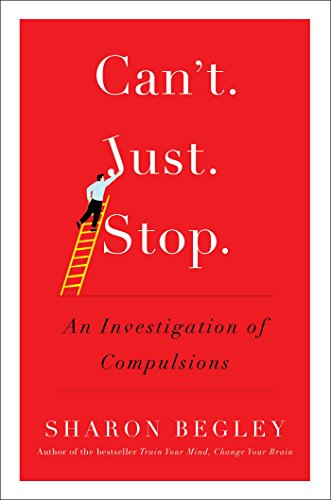
Can't Just Stop: An Investigation of Compulsions, by Sharon Begley

Can't Just Stop: An Investigation of Compulsions, by Sharon Begley


Can't Just Stop: An Investigation of Compulsions, by Sharon Begley

Free Ebook Can't Just Stop: An Investigation of Compulsions, by Sharon Begley

How if there is a site that enables you to search for referred book Can't Just Stop: An Investigation Of Compulsions, By Sharon Begley from all around the globe author? Immediately, the website will be unbelievable completed. Numerous book collections can be found. All will be so easy without complicated thing to relocate from website to site to obtain the book Can't Just Stop: An Investigation Of Compulsions, By Sharon Begley wanted. This is the site that will certainly offer you those expectations. By following this website you can obtain whole lots numbers of publication Can't Just Stop: An Investigation Of Compulsions, By Sharon Begley compilations from versions types of writer and author prominent in this globe. Guide such as Can't Just Stop: An Investigation Of Compulsions, By Sharon Begley and others can be gained by clicking nice on web link download.

If you get the published book Can't Just Stop: An Investigation Of Compulsions, By Sharon Begley in on-line book store, you may additionally locate the same problem. So, you have to move store to store Can't Just Stop: An Investigation Of Compulsions, By Sharon Begley and also look for the offered there. Yet, it will certainly not take place right here. The book Can't Just Stop: An Investigation Of Compulsions, By Sharon Begley that we will certainly offer right here is the soft data principle. This is what make you could conveniently find as well as get this Can't Just Stop: An Investigation Of Compulsions, By Sharon Begley by reading this website. Our company offer you Can't Just Stop: An Investigation Of Compulsions, By Sharon Begley the very best item, constantly and always.

Never doubt with our offer, since we will consistently offer what you require. As like this upgraded book Can't Just Stop: An Investigation Of Compulsions, By Sharon Begley, you may not find in the various other location. However right here, it's quite easy. Merely click and download, you could have the Can't Just Stop: An Investigation Of Compulsions, By Sharon Begley When simplicity will relieve your life, why should take the complicated one? You can purchase the soft file of the book Can't Just Stop: An Investigation Of Compulsions, By Sharon Begley right here and be participant people. Besides this book Can't Just Stop: An Investigation Of Compulsions, By Sharon Begley, you could likewise find hundreds lists of the books from many sources, collections, publishers, and authors in around the world.

By clicking the web link that we offer, you can take the book Can't Just Stop: An Investigation Of Compulsions, By Sharon Begley completely. Attach to net, download, and save to your tool. What else to ask? Checking out can be so easy when you have the soft file of this Can't Just Stop: An Investigation Of Compulsions, By Sharon Begley in your device. You can additionally copy the data Can't Just Stop: An Investigation Of Compulsions, By Sharon Begley to your workplace computer or in the house or even in your laptop. Merely share this excellent information to others. Suggest them to see this resource as well as get their hunted for books Can't Just Stop: An Investigation Of Compulsions, By Sharon Begley.

Can't Just Stop: An Investigation of Compulsions, by Sharon Begley

The first book to examine the science behind both mild and extreme compulsive behavior—using fascinating case studies to understand its deeper meaning and reveal the truth about human compulsion.

Whether shopping with military precision or hanging the tea towels just so, compulsion is something most of us have witnessed in daily life. But compulsions exist along a broad continuum, and at the opposite end of these mild forms exist life altering disorders.

Sharon Begley’s meticulously researched book is the first of its kind to examine all of these behaviors—mild and extreme (OCD, hoarding, acquiring, exercise, even compulsions to do good)—together, as they should be, because while forms of compulsion may look incredibly different, these are actually all coping responses to varying degrees of anxiety.

With a focus on personal stories of dozens of interviewees, Begley employs genuine compassion and gives meaningful context to their plight. Along the way she explores the role of compulsion in our fast paced culture, the brain science behind it, and strange manifestations of the behavior throughout history.

Can’t Just Stop makes compulsion comprehensible and accessible, exploring how we can realistically grapple with it in ourselves and those we love.

  • Sales Rank: #46693 in eBooks
  • Published on: 2017-02-07
  • Released on: 2017-02-07
  • Format: Kindle eBook

Review
"A fascinating read about human behavior and how it can go haywire."
—The Charlotte Observer

"In this fascinating read, Begley combines a personal topic with thoughtfulness and sensitivity. Recommended for anyone interested in learning more about compulsive behavior."
—Library Journal

"Begley's final chapter on brain function in the compulsive mind contains fresh insight that could fundamentally alter how we think of, and treat, mental illness going forward."
—Publishers Weekly

"[Begley's] captivating, accessible anecdotes of individual cases lead to unforgettable scenarios."
—Kirkus

“Sharon Begley has done us all a service, writing about compulsion without writing about disease�and offering a new perspective on a phenomenon that is common if not universal. People troubled by their own compulsive behavior will appreciate her nuanced and balanced approach and perhaps come away with a new understanding of themselves.”
—Gary Greenberg, THE BOOK OF WOE: The DSM and the Unmaking of Psychiatry

“Sharon Begley is the liveliest science writer around.�Can't Just Stop�offers both a state of the science look at compulsions (and who doesn't have some?) and a delightful read."
—Daniel Goleman, EMOTIONAL INTELLIGENCE:�Why It Can Matter More Than IQ

“Filled with emotionally resonant stories, Can't Just Stop helps us understand not only the underpinnings of some forms of mental illness, but also the everyday worries that drive so much of our behavior. A fascinating peek into the human mind in our age of anxiety.”
—David Kessler, author of CAPTURE: Unraveling the Mystery of Mental Suffering

“At once fascinating and compassionate, funny and informative, this volume should be on the bookshelf of every psychiatrist, and on the nightstand of anyone who enjoys absorbing and incisive writing.”
—Joel Gold, M.D., author of�SUSPICIOUS MINDS: How Culture Shapes Madness

About the Author
“Sharon Begley has done us all a service, writing about compulsion without writing about disease, and offering a new perspective on a phenomenon that is common if not universal. People troubled by their own compulsive behavior will appreciate her nuanced and balanced approach and perhaps come away with a new understanding of themselves.”
—Gary Greenberg, THE BOOK OF WOE: The DSM and the Unmaking of Psychiatry

“Filled with emotionally resonant stories, Can't Just Stop helps us understand not only the underpinnings of some forms of mental illness, but also the everyday worries that drive so much of our behavior. A fascinating peek into the human mind in our age of anxiety.”
—David Kessler, author of CAPTURE: Unraveling the Mystery of Mental Suffering

Excerpt. � Reprinted by permission. All rights reserved.
Can’t Just Stop CHAPTER ONE What Is a Compulsion?
A GENERATION OR SO AGO, it became trendy to describe all sorts of excessive behaviors as addictions, meaning an intense appetite for an activity, as in “I’m addicted to shopping”�.�.�. or to weaving, yoga, jogging, work, meditating, making money (as a 1980 book called Wealth Addiction argued) or even to playing Rubik’s Cube (a 1981 story in the New York Times deemed it “an addictive invention”). Once neurobiologists discovered that the same brain circuitry underlying addictions to nicotine, opiates, and other substances is also involved in, for instance, a chocoholic’s craving for Teuscher truffles, pop sociologists were off to the races. Suddenly, we were all addicted to email and working and Angry Birds playing and Facebook posting and�.�.�. well, everything that some people do in excess became an addiction. The only significant scientific barrier to this trend—psychiatry did not recognize any behavior as addictive in the formal sense of the term—fell in 2013. That spring, the American Psychiatric Association published the latest edition of its Diagnostic and Statistical Manual of Mental Disorders, widely regarded as the bible of the field, and for the first time it recognized a behavioral addiction: gambling.

Gambling made the cut because it met the three criteria that, for decades, have been the defining characteristics of an addiction. First, the behavior (or substance) is intensely pleasurable, at least initially, and sinks its claws into soon-to-be addicts the first time they experience it. Second, engaging in the addictive behavior produces tolerance, in which an addict needs more and more of something to derive the same hedonic hit. And, finally, ceasing to engage in the addictive behavior triggers agonizing withdrawal symptoms on a par with those that torture the addict who is trying to kick a heroin habit.

By these criteria, “addictions” to the electronic crack of the twenty-first century don’t look like addictions, and they don’t feel like it either, most crucially because they lack the defining hedonic quality. For me, at least, compulsively checking for emails feels more like what people with obsessive-compulsive disorder experience right before the urge to wash their hands or straighten a picture or step on the magical fourth sidewalk crack (because if they don’t their mother will die). It feels like something you have to do, not something you want to do; something that alleviates anxiety (Is an elusive source finally getting back to me, but about to try a competitor unless I reply in the next five seconds?), rarely something that brings pleasure.

They are compulsions, not addictions.

What’s the difference? The two terms are often used interchangeably in casual conversation (“compulsive shopping” vs. a “shopping addiction”) with a mention of “impulsive” often thrown in for good measure. But since this is a book about compulsions and not addictions, let me explain how experts understand the differences.

To wit: surprisingly, alarmingly, disappointingly, exasperatingly poorly.
A Taxonomic Odyssey
Without ratting out people who were kind enough to sit still for my persistent questioning, I’ll simply note that they did not fill me with confidence about the solidity of the scientific foundation underpinning the understanding of compulsive behaviors. “Well, a behavioral addiction is governed by things like neurons and hormones,” one tentatively began. “But a compulsive behavior is psychological, but is governed by physical mechanisms.” Huh? The muddle was captured nicely, if inadvertently, by a 2008 paper in which the authors invent something they name “impulsive-compulsive sexual behavior” and define it as “one type of addictive behavior.” Trifecta: a behavior that’s impulsive, compulsive, and addictive.

The lines dividing a compulsive behavior from an addictive one from an impulsive one seem to shift like tastes in fashion, and the confusion between and among them was practically codified by the many iterations of the American Psychiatric Association and its Diagnostic and Statistical Manual. Over the decades, the editions of the mega-selling DSM have rotated addiction, compulsion, and impulse through the definitions of syndromes, including eating disorders and anxiety disorders, as if the three were interchangeable. The DSM hasn’t even managed to draw clear boundaries around OCD, which you’d think would be firmly ensconced as a compulsive disorder by virtue of its name, if nothing else. But no: early editions of the DSM described obsessive-compulsive disorder as marked by recurrent and persistent impulses to do this or that. When the APA’s experts began working on what would become the DSM-5, their working names for pathological Internet use and pathological shopping were “C-I Internet usage” and “C-I shopping”—where the C stood for compulsive and the I for impulsive. The idea was that the excessive behaviors have features of both: impulsivity is the proximate cause, but a compulsive drive makes the behavior persist.

To get a sense of how muddled the taxonomy was, consider trichotillomania, which afflicted Amy, whom you met in the Introduction. In 1987 it entered that year’s DSM (edition III-R) as an impulse-control disorder, along with kleptomania, pyromania, and intermittent explosive disorder, among others. That reflected the common meaning of impulsivity as “rapid, unplanned behavior with little foresight of or regard for the negative consequences,” as Yale University psychiatrist Marc Potenza defined it one day when I visited his office in downtown New Haven, Connecticut. But the 1994 edition, DSM-IV, added two criteria for diagnosing trichotillomania: “an increasing sense of tension immediately before pulling out the hair or when attempting to resist the behavior,” and “pleasure, gratification, or relief when pulling out the hair.” Both of these are exactly what defines a compulsion. Yet trichotillomania sat among the impulse-control disorders until 2013, when the DSM-5 (it switched that year from Roman numerals to Arabic) plucked it out of the impulse-control disorders and stuck it at the end of the chapter on OCD as a “related disorder.” Oh, and the DSM-5 eliminated the criteria that hair pulling be preceded by tension and lead to relief—and yet there it sits, in the OCD chapter, a chapter for a disorder whose defining characteristic is the anxiety that spurs an action that relieves said anxiety.

Tric’s wanderings in the psychiatric wilderness are nothing compared to those of pathological gambling. The 1994 DSM had put compulsive gambling (my emphasis) in a grab-bag category called “impulse-control disorders not elsewhere classified,” along with kleptomania, pyromania, and others. Again, that reflected the thinking that someone might impulsively decide to play the ponies and then, through some poorly understood mechanism, segue into doing so compulsively. In 2013, gambling also pulled off the trifecta: having previously been called compulsive and classified as impulsive, it became the first behavioral disorder to be formally categorized as an addiction.

At least the new classification made sense, in that it hewed to the traditional three-part understanding of addiction (initial hedonic hit leading to intense desire for the substance or, now, the experience; tolerance; withdrawal) in the context of drugs. For starters, pathological gamblers experience cravings as powerful as a junkie’s. While it’s obviously tricky to quantify a subjective experience like craving, there is some empirical evidence that the brain mechanisms underlying an addiction to gambling overlap with those in an addiction to alcohol, nicotine, pain pills, or illegal drugs: when pathological gamblers watch videos of people playing craps or roulette or another casino game, the regions of their brains’ frontal cortex and limbic system that spike with activity are nearly identical to the regions that go haywire in cocaine addicts who watch videos of people doing lines. In addition, pathological gamblers build up tolerance to gambling just as alcoholics do to booze or junkies to heroin: to get the same pleasurable rush from gambling, they have to make larger and larger bets. And finally, pathological gamblers experience psychological withdrawal when they try to quit or even taper off, again akin to what substance abusers suffer. Cravings, tolerance, withdrawal: pathological gambling qualifies as an addiction.

In part, addiction and compulsion get mixed up because both words are used in ordinary language as well as clinical terminology, said Tom Stafford, a cognitive scientist at England’s University of Sheffield who studies compulsive video-gaming. “Many people are cavalier about saying they’re addicted to sports, or to shopping, or to their iPhone,” he told me. “There isn’t a clear line between an addiction like alcohol and a behavior they are very compelled to do, but I’d rather use the term compulsion for these behaviors.”

It isn’t just casual use of the terms that causes confusion. “It’s a real scientific controversy, how and in what ways addictions are or are not like compulsive behaviors,” James Hansell, a professor and clinical psychologist at George Washington University and coauthor of a popular textbook on abnormal psychology, told me. Hansell paused, as if trying to find properly diplomatic language: “There is a primitive quality to this, trying to define what is a compulsion and what’s an addiction.”I

Indeed, many researchers feel that the understanding, not just the nomenclature, of excessive behavior “has been shifting under our feet,” as psychologist Carolyn Rodriguez of Columbia University said when I visited her office at Columbia University Medical Center. “Terms we had been using—like addiction, compulsion, and impulse control—are being looked at in a new light.” Is there any hedonic hit from executing a compulsion? Rodriguez flipped through her mental Rolodex of patients. “In talking to them, I wouldn’t say it feels good,” she answered. “It just relieves anxiety.” That relief might feel good, but it’s a different kind of good than the pleasure that giving in to an addiction brings. Executing a compulsion brings an ebbing of the tide of angst, a lifting of the cap from a shaken soda bottle about to explode. People who feel compelled have a mental itch they need to scratch, like a poison ivy of the mind. One of Rodriguez’s patients, she told me, “has intrusive thoughts about the name James. It makes him so anxious that if he ever sees it—like in the newspaper—he has to write Edward to cancel it out, and use Visine to wash away the sense that ‘James’ has contaminated his eyes.” Rodriguez paused. “These people really suffer.”

Fortunately, a growing number of experts have begun to grapple with the failure to clearly distinguish addictions from compulsions from poor impulse control, and not merely to classify behaviors correctly for the sake of tidiness. There is a practical motivation, too: if therapists aren’t sure whether the behavior that has hijacked your life is a compulsion, an addiction, or a manifestation of lousy impulse control, they’re not likely to identify the most effective therapy. The treatment for a behavioral addiction is very different from that for a compulsive behavior, which in turn is different from the treatment for an impulse-control disorder. “You do need to get it right to determine effective treatment,” Yale’s Potenza said.

What finally emerged is this three-part taxonomy:

An addiction begins with a flash of pleasure overlaid by an itch for danger; it’s fun to gamble or to drink, and it also puts you at risk (for losing your rent money, for acting like an idiot). You like how you feel when you win or when you get a buzz on. The addict-to-be takes a drag on a cigarette and finds that the nicotine hit makes him feel energized or mentally sharper. But eventually the substance or behavior ceases to bring pleasure, not only at the original levels of use but even at the extreme levels that typically characterize an addiction. Smokers lament that the forty-third cigarette of the day just isn’t as pleasurable as the third smoke used to be. What once brought the high no longer does, necessitating ever-increasing doses, in substance abuse and in a gambler’s greater bets. Despite the diminishing hedonic return on investment, so to speak, to cease engaging in the addictive behavior causes abject misery and, often, physical withdrawal pains like the shakes, irritability, or moodiness. Pleasure, tolerance, withdrawal: the Big Three of addiction.

Impulsive behaviors involve acting without planning or even thought, driven by pleasure seeking and an urge for immediate gratification. They have an element of risk seeking—Hey, I bet it would be a blast to swan dive off this cliff!—where the risk is expected to lead to a feeling of reward. Pyromania and kleptomania are classic impulsive behaviors because they’re all about seeking pleasure and excitement. As a result, impulsivity can be the first step toward a behavioral or substance addiction. Something (a stimulus) triggers a response, and the pathway from the stimulus to response does not pass through the cognitive or even the emotional brain, at least not consciously. Instead, an urge zips from your most primitive brain center to your motor cortex—Claim that wonderful sofa someone left at the curb; grab that luscious-looking cherry cheesecake from the dessert cart—without so much as a pit stop in regions that control higher-order cognitive functions (Where the heck would you put another couch? You know you’ll feel guilty if you eat that). You do it reflexively. Like addictions, impulsive behaviors “have a hedonic quality,” Jeff Szymanski, executive director of the International OCD Foundation (IOCDF), told me when we met in his hotel suite during the Foundation’s 2013 annual meeting. “ ‘I stole and got away with it,’ ‘I lit this fire and got all these cool fire trucks to show up’—very much like, ‘I gambled and won.’ It’s not about reducing anxiety.” We give in to impulses because we expect to be rewarded with a feeling of pleasure or gratification or excitement. Impulses make us grab the 500-calorie muffin when we were sure when we entered the store that all we wanted was a skinny latte. Like addictive behaviors, impulsive ones offer the allure of something pleasurable. Impulsive behaviors become impulse-control disorders when you repeatedly give in to your urges and suffer detrimental consequences.

Compulsions, in contrast to addictive and impulsive behaviors, are all about avoiding unpleasant outcomes. They are born in anxiety and remain strangers to joy. They are repetitive behaviors we engage in over and over and over again to alleviate the angst brought on by the possibility of negative consequences. But the actual behavior is often unpleasant—or at least not particularly rewarding, especially after umpteen rounds of it. At its simplest, the anxiety takes the form of the thought If I don’t do this, something terrible will happen. If I don’t check my BlackBerry constantly, I’ll miss seeing emails the millisecond they land, and will therefore not reply in time to an urgent invitation or demand from my boss, or will just feel like I don’t know what is going on. If I do not check my fianc�’s Web history, I will not know whether he is cheating. If I do not religiously organize my closets, my home will be engulfed in chaos. If I don’t shop, it will be proof that I can’t afford nice things and am headed for homelessness. If I don’t hang on to each precious object and instead bow to my family’s wishes that I shovel out the clutter, I will feel exposed and vulnerable, like my most treasured memories have been buried in a landfill.

Underlying every compulsion is the need to avoid what causes you pain or angst. “A compulsive behavior is one that’s done with the intent of decreasing an overwhelming sense of anxiety,” said Szymanski, who before becoming executive director of the foundation in 2008 treated patients at McLean Hospital’s Obsessive Compulsive Disorder Institute. Unlike addictions with their frisson of risk taking, he said, “a compulsive behavior is risk averse,” driven by the need to avoid harm and executed with the goal of reducing the anxiety triggered by the thought of that harm. I must do this to quell my fear and anxiety. The roots of compulsion lie in the brain circuit in charge of detecting threats. This circuit, receiving a message from the visual cortex that a stranger is lurking in the dark doorway up ahead on the deserted street where you’re walking alone, screams, danger, danger! “That’s anxiety,” said Szymanski. “It’s the feeling that something is not quite right and that you may be in some sort of danger. You have a crushing emotion that you would do anything to get rid of.”

Soon after interviewing Szymanski, I trekked up to the Bronx to meet Simon Rego, a psychologist at Montefiore Medical Center who specializes in OCD. “As long as the function is to relieve distress or anxiety or prevent a catastrophe that you firmly believe will otherwise happen, it’s a compulsion,” he said. “People will do a compulsion until ‘it feels right.’ Compulsions come from a sense that if I can’t do this, I’m terrified about what will happen. The relief from distress can be pleasurable, if you think that calling a halt to smacking your head against a stone wall is pleasurable, but not in the same way that an addictive behavior is pleasurable.”

Thus, a compulsive behavior is one that you engage in to squelch anxiety. That’s clearest in OCD, where a compulsion is paired with and preceded by a specific obsession, an anxiety-provoking thought that you can’t shake. You are obsessed with the thought that your hands are dirty and so you compulsively wash; you are obsessed with the thought that you left the stove on and so you keep returning home to check; you are obsessed with the belief that stepping on a sidewalk crack will bring a world of tragedy down upon your family and so you meticulously pick your way across the concrete.

The examples of the self-destructive rituals that OCD sufferers resort to in order to alleviate anxiety are legion. David, whom I visited in his Brooklyn apartment, apologized that he had not showered before I arrived. The reason, he said, was that when he showers he feels so compelled to scrub every square millimeter of his skin, and so certain he has missed a spot, that he will spend hours and hours under the pounding water, which would have made him late for our appointment. Others with a similar shower compulsion have it even worse: they use up the building’s hot water and put them at risk for hypothermia when they can’t leave the stall despite the freezing-cold water pouring onto them.

By the end of my taxonomic odyssey, I had settled on this: A compulsion differs from an addiction because the initial impetus is alleviating anxiety, not finding pleasure, and because how much you need to engage in the compulsive behavior in order to do that does not escalate, as it does with an addiction. A compulsion is a driven behavior where the emotion behind the wheel is a psychic itch, a sense of distress, even a sense of foreboding which grows worse and worse if you do not give in. “Compulsive behavior is a form of self-medication,” as James Hansell put it. “There are painful emotions being numbed or soothed or avoided by means of the compulsive behavior. There is anxiety underneath it.” The compulsive behavior keeps pain at bay. It’s a form of self-reassurance—Everything’s okay now that I’ve checked the BlackBerry in the elevator leaving my office all of fifteen seconds after I checked the email on my desktop, but boy, I feel much better. Oh, wait, maybe a new one has arrived�.�.�. Compulsions become habit-forming because they work so well: my worries about being out of the loop by failing to read a text the instant it lands melt away when I check compulsively. So I’ll just keep doing it.
Complications Ensue
Just when I thought I had it all sorted out, Scott Caplan, a psychologist at the University of Delaware who studies excessive online gaming and Internet use, warned me, “Remember, ‘addiction’ and ‘compulsion’ are just words that people came up with. They may not track nature perfectly.”

Among the imperfections: an addiction can become a compulsion in the sense I’m using it. Over time, a behavioral addiction that began with thrill and pleasure seeking, driven by an overpowering desire for risk and reward, can segue into being all about assuaging the anxiety, agitation, and overall misery that come from tolerance and withdrawal. The addict uses the substance or engages in the behavior compulsively even though the reward waiting at the end of the rainbow is pleasurable only in the sense that when you stop hitting yourself over the head with a hammer it feels pleasurable. Deep into an addiction, said psychologist Nicole Prause of the University of California, Los Angeles, “a reward state changes into an aversive, craving state, and you begin to take a substance or engage in a behavior to decrease negative affect. You don’t want to do it, but you have to in order to get yourself back to baseline, emotionally and psychologically.” What had been an addiction morphs into a compulsion.

Another wrench thrown into this neat taxonomy is that the same behavior can be a compulsion for one person, an impulse-control disorder for another, and a behavioral addiction for a third. One over-shopper hits the mall because of a failure of impulse control: she can’t keep herself from steering into the parking lot while driving home, can’t keep from “just checking to see if there’s anything good on sale,” and can’t keep from buying. Again. But for other over-shoppers the behavior is a compulsion: if they are not engaging in it, their anxiety rises to an intolerable level, and engaging in it assuages that anxiety.

Compulsive exercising illustrates the difficulty of trying to fit complicated, messy human behaviors into neat pigeon holes. When research on excessive exercise took off in the 1970s, about the time the jogging craze spread across the United States, scientists struggled to define what, exactly, they were studying. To some, the phenomenon of exercising to excess was “exercise addiction.” To others it was “obligatory exercise,” “compulsive exercise,” or even a noble-sounding “commitment” to exercising arising from a competitive drive, a devotion to fitness, or the love of a challenge.II

The terminological mishmash underlined the fact that scientists did not know whether they were dealing with an addiction (motivated by pleasure) or a compulsion (driven by an anxiety that only exercising could quell) or something else. A 2002 review of eighty-eight studies on excessive exercise, published over the previous twenty-nine years, found that the research had been hampered by “inconsistent or nonexistent control groups, discrepant operational criteria for exercise dependence, and/or invalidated or inappropriate measures of exercise dependence,” as researchers at the University of Florida concluded in Psychology of Sport and Exercise. In other words, attempts to study extreme exercising were so lacking in methodological rigor they were practically junk science.

But the problematic studies, in asking people to articulate why they exercised, did offer at least a glimmer of an empirically based taxonomy. People may punish their body through exercise for all sorts of complicated psychological reasons, research has shown. Some are motivated by the need to feel they are in control of at least part of their destiny, namely, their fitness and physiology. Others are driven by a need to demonstrate they can rise above common physical needs (“rest is for the weak”) or that willpower can vanquish baser desires (to self-indulgently laze around). Still others, who take up exercise to improve their fitness, are driven to ever-longer and more frequent bouts of running or using a treadmill because it brings them pleasure—the hedonic-hit model of addiction. Others exercise for extrinsic rewards such as medals and the admiration of others. In none of these cases, however, do the extreme exercisers feel like their brain is about to explode if they can’t exercise.

In contrast, compulsive exercisers tend to exercise for intrinsic, mood-altering or -stabilizing reasons. They view exercise as the focus of their lives. It is the only way to relieve unbearable anxiety, and they suffer that anxiety if unable to exercise. They might have once been motivated by the pull of fitness, but eventually they do not so much enjoy exercise as find it the only way to quell the angst they feel when they are not exercising. “We know people have various motives for starting to exercise,” said Danielle Symons Downs, a kinesiologist at Pennsylvania State University who developed an exercise dependence scale so therapists and individuals can assess whether the exercise is excessive. “And there are multiple reasons” why people do it to excess; “doing it to avoid intolerable anxiety is plausible.” These are our compulsives, people like Carrie Arnold.

Granted, the boundaries between addiction and compulsion can be fuzzy, since being deprived of an activity you deeply enjoy and want can trigger anxiety, too. But an addiction is born in joy and pleasure, a compulsion in anxiety. Compulsive exercisers experience “higher levels of anxiety when not running compared to non-obligatory runners,” as the 2002 review put it. They feel antsy or worse if they miss a workout. The purpose, as is definitionally true of any compulsion, is “alleviating negative emotions,” researchers led by Caroline Meyer of England’s Loughborough University wrote in a 2011 study in the International Journal of Eating Disorders. “A key feature of compulsive exercise is a negative mood, such as experiencing feelings of anxiety, depression, and guilt when deprived of exercising.”

Where does that come from? The psychological and personality traits that put someone at risk of “developing a compulsivity towards exercise,” as Meyer put it, include perfectionism and other elements of obsessive-compulsive personality disorder. In particular, compulsive exercisers tend to express much greater concerns over mistakes than other people do, have sky-high personal standards of achievement and morality, and feel chronic doubts about their actions—all reminiscent of the extreme conscientiousness that characterize mild compulsions.III

“Perfectionism was among the best predictors of compulsive exercise,” Meyer reported. The inevitable falling short of perfection provokes anxiety, which only exercise can quiet—and the result is a compulsion to work out to a self-destructive extreme.

*��*��*

To a man with a hammer, everything looks like a nail; to a reporter immersed in the science and phenomenology of compulsions, everything we do seems driven by anxiety, and every quirky extreme of behavior seems compulsive. In reporting the prevalences of the various forms of compulsion, I used the most credible numbers I could find, usually from a source such as the National Institute of Mental Health. But the recent surge in diagnoses of mental illness might not be what it seems. For one thing, psychiatrists and others have been relentless in spreading the message that we have a vast, underdiagnosed epidemic of mental illness. As a result, millions of people have taken it to heart, convinced they have a mental disorder and seeking professional confirmation of that. A loosening of diagnostic criteria is likely also fueling the reported rise in the incidence of mental disorders: over the years psychiatrists have decreed that you have to feel a certain way or experience certain symptoms for only three months instead of six, or have six symptoms rather than nine, to qualify for a formal diagnosis. The “epidemics” that the mental health industry cites reflect “changing diagnostic fashions,” psychiatrist Allen Frances, who chaired the DSM-IV task force, told me. “It’s not that more people are mentally ill, but that what counts as a mental illness changes.” Remember, too, that there are no brain scans, blood tests, or other objective biomarkers for mental disorders. Rather, to make a diagnosis, psychiatry and psychology rely almost entirely on patients’ self-report of how they are feeling. It isn’t hard to meet criteria for one or another DSM diagnosis, especially because the experts who devise the criteria worry more about missing cases than about diagnosing as “mentally ill” people who are not. To a certain extent, it seems, we’re as mentally ill as we think we are.

In speaking to people in the grip of extreme compulsions, I often felt as if I was looking into suns so bright they overwhelmed the planets and the stars. Even after I understood that compulsive behaviors so extreme as to derail lives, loves, and careers stemmed from a desperate need to keep anxiety at bay, it was hard to see that these were just the hypertrophied versions of ordinary, everyday quirks; they were too jarring, too off-putting. But just as the dimmer celestial denizens invisibly populate the daytime sky as well as the night’s, so less extreme versions of compulsive behaviors are all around us�.�.�. and, if we look carefully enough, within us. So much of what we do, for good or ill, arises from the same spring as compulsions. By seeing our and others’ behaviors through that prism, what had seemed inexplicable becomes understandable. And what I came to understand above all is that compulsive behavior is not necessarily a mental disorder. Some forms of it can be, and people in its clutches deserve to be diagnosed and helped. But many, many compulsions are expressions of psychological needs as common within humankind as to feel at peace and in control, to feel connected and to matter. And if those are mental illnesses, then we’re all crazy.

I.�Soon after we spoke, Hansell died suddenly in 2013 at age fifty-seven.

II.�By whatever name, excessive exercising is not as prevalent as one might think from the gyms full of people taking spin classes or sweating on ellipticals. Even among the physically active, the population from whom studies typically seek volunteers, the prevalence of excessive exercise is around 3 percent.

III.�Mild compulsions are typical of obsessive-compulsive personality disorder, which itself is often driven by perfectionism, as I describe in Chapter 2.

Most helpful customer reviews

1 of 1 people found the following review helpful.
"Compulsion" explained for the rest of us.
By Paul Allaer
"Can't. Just. Stop. - An Investigation of Compulsions" (2017 release; 304 pages) is a book from science writer Sharon Begley about the concept of "compulsion". Which of course begs the question, what is a compulsion anyway, and how is it different from, say, addiction or impulse? Maybe you are someone for whom this is all very clear, but I suspect that for the vast majority of us (and certainly for myself), I couldn't possibly explain the difference between these concepts. Ms. Begley to the rescue! She tackles the subject with ease and with clarity so that even the interested non-expert such as myself gets a better understanding of it all. "Compulsions, in contrast to addictive and impulsive behaviors, are all about avoiding unpleasant outcomes. They are born in anxiety and remain strangers to joy. At its simplest, the anxiety takes the form of the thought If 'I don't do this, something terrible will happen'."

Later in the book, the author looks at various forms of behaviors: is fanatic video-gaming an addiction or a compulsion? What about endlessly checking your smartphone? The book rounds out with a number of chapters detailing 'classic' compulsions, including compulsive hoarding (how does it differ from the avid collector?), compulsive acquiring (and how is THAT different from the avid collector?), and even the compulsive do-gooder (what drives someone to donate a kidney to a stranger?). Along the way, the book is chock-full of real-life examples and testimonies.

As someone who is interested in this stuff but without any scientific background, I feel that Begley did an outstanding job in describing these complicated issues in nuanced and easy to understand terms. If you are interested in this area, by all means pick this up, you won't regret it. "Can't. Just. Stop." is HIGHLY RECOMMENDED!

0 of 0 people found the following review helpful.
Excellent Book
By Claire
One of my little coping mechanisms for dealing with the anxiety in my life is to go to my local bookstore and browse. If I happen upon a book that speaks to my particular challenges at the moment, I will purchase it. Last week, I found this book. It spoke to me in many ways, but mostly as a human struggling to make sense of the world and other humans in it. It is difficult to find objective, well-researched and well-written information in the area of mental health. This book is the mother lode. Thank you Sharon Begley.

1 of 2 people found the following review helpful.
Can't Just Stop: An Investigation of Compulsions by Sharon ...
By Kristine Fisher
Can't Just Stop: An Investigation of Compulsions by Sharon Begley is a free NetGalley ebook that I read in early January.

Adored every nuance of this book - Begley is precise in her description of compulsion as danger aversion, avoiding dread and harm, maintaining control and personal productivity, and escaping intrusive thoughts.

See all 3 customer reviews...

Can't Just Stop: An Investigation of Compulsions, by Sharon Begley PDF
Can't Just Stop: An Investigation of Compulsions, by Sharon Begley EPub
Can't Just Stop: An Investigation of Compulsions, by Sharon Begley Doc
Can't Just Stop: An Investigation of Compulsions, by Sharon Begley iBooks
Can't Just Stop: An Investigation of Compulsions, by Sharon Begley rtf
Can't Just Stop: An Investigation of Compulsions, by Sharon Begley Mobipocket
Can't Just Stop: An Investigation of Compulsions, by Sharon Begley Kindle

Can't Just Stop: An Investigation of Compulsions, by Sharon Begley PDF

Can't Just Stop: An Investigation of Compulsions, by Sharon Begley PDF

Can't Just Stop: An Investigation of Compulsions, by Sharon Begley PDF

Sabtu, 27 Maret 2010

[L824.Ebook] PDF Ebook Happiness Is . . . One Happy Thing Every Day: A Three-Year Journal, by Ralph Lazar, Lisa Swerling

PDF Ebook Happiness Is . . . One Happy Thing Every Day: A Three-Year Journal, by Ralph Lazar, Lisa Swerling

Happiness Is . . . One Happy Thing Every Day: A Three-Year Journal, By Ralph Lazar, Lisa Swerling Just how can you change your mind to be more open? There numerous sources that can aid you to improve your thoughts. It can be from the various other experiences and also tale from some individuals. Schedule Happiness Is . . . One Happy Thing Every Day: A Three-Year Journal, By Ralph Lazar, Lisa Swerling is one of the trusted resources to obtain. You could find numerous books that we discuss here in this internet site. And also currently, we reveal you among the most effective, the Happiness Is . . . One Happy Thing Every Day: A Three-Year Journal, By Ralph Lazar, Lisa Swerling

Happiness Is . . . One Happy Thing Every Day: A Three-Year Journal, by Ralph Lazar, Lisa Swerling

Happiness Is . . . One Happy Thing Every Day: A Three-Year Journal, by Ralph Lazar, Lisa Swerling


Happiness Is . . . One Happy Thing Every Day: A Three-Year Journal, by Ralph Lazar, Lisa Swerling

PDF Ebook Happiness Is . . . One Happy Thing Every Day: A Three-Year Journal, by Ralph Lazar, Lisa Swerling

Is Happiness Is . . . One Happy Thing Every Day: A Three-Year Journal, By Ralph Lazar, Lisa Swerling publication your preferred reading? Is fictions? Exactly how's concerning history? Or is the best seller unique your selection to fulfil your spare time? And even the politic or religious books are you hunting for now? Below we go we provide Happiness Is . . . One Happy Thing Every Day: A Three-Year Journal, By Ralph Lazar, Lisa Swerling book collections that you need. Lots of numbers of publications from several industries are given. From fictions to scientific research and also religious can be looked as well as learnt here. You might not stress not to find your referred publication to read. This Happiness Is . . . One Happy Thing Every Day: A Three-Year Journal, By Ralph Lazar, Lisa Swerling is among them.

Obtaining the books Happiness Is . . . One Happy Thing Every Day: A Three-Year Journal, By Ralph Lazar, Lisa Swerling now is not sort of tough means. You could not just choosing publication store or library or borrowing from your buddies to read them. This is a really easy way to precisely obtain the publication by on-line. This online publication Happiness Is . . . One Happy Thing Every Day: A Three-Year Journal, By Ralph Lazar, Lisa Swerling could be among the options to accompany you when having downtime. It will not squander your time. Believe me, guide will certainly show you new point to review. Merely spend little time to open this on-line book Happiness Is . . . One Happy Thing Every Day: A Three-Year Journal, By Ralph Lazar, Lisa Swerling and also read them wherever you are now.

Sooner you get the e-book Happiness Is . . . One Happy Thing Every Day: A Three-Year Journal, By Ralph Lazar, Lisa Swerling, faster you could enjoy reviewing the book. It will be your count on keep downloading guide Happiness Is . . . One Happy Thing Every Day: A Three-Year Journal, By Ralph Lazar, Lisa Swerling in offered web link. This way, you could really choose that is offered to obtain your own publication online. Here, be the initial to obtain the e-book qualified Happiness Is . . . One Happy Thing Every Day: A Three-Year Journal, By Ralph Lazar, Lisa Swerling as well as be the initial to understand just how the writer implies the message and also expertise for you.

It will certainly believe when you are visiting choose this publication. This inspiring Happiness Is . . . One Happy Thing Every Day: A Three-Year Journal, By Ralph Lazar, Lisa Swerling e-book could be checked out totally in specific time depending upon just how usually you open up as well as read them. One to keep in mind is that every publication has their very own production to get by each reader. So, be the great viewers and be a far better individual after reading this publication Happiness Is . . . One Happy Thing Every Day: A Three-Year Journal, By Ralph Lazar, Lisa Swerling

Happiness Is . . . One Happy Thing Every Day: A Three-Year Journal, by Ralph Lazar, Lisa Swerling

For anyone in search of a happier life, this delightful journal provides a place to record one happy thing each day for three years. Once the journal is filled, readers have an album of their happiest memories—from the big things like a job promotion to the little things like a perfect cup of coffee—and the habit of seeking out happiness every day.

  • Sales Rank: #122662 in Books
  • Published on: 2016-03-15
  • Released on: 2016-03-15
  • Original language: English
  • Number of items: 1
  • Dimensions: 5.25" h x 1.25" w x 5.25" l, .56 pounds
  • Binding: Stationery
  • 372 pages

About the Author
LISA SWERLING and RALPH LAZAR are famed illustrators and the authors of the bestseller Me Without You (almost 250,000 copies sold). They live in Marin County, California.

Most helpful customer reviews

0 of 0 people found the following review helpful.
Five Stars
By Amazon Customer
I love this book. It makes the perfect gift.

0 of 0 people found the following review helpful.
Three Stars
By Amazon Customer
Cover came with wear and dirt on :(

0 of 0 people found the following review helpful.
Happiness
By EPG
Simple, but I like it

See all 3 customer reviews...

Happiness Is . . . One Happy Thing Every Day: A Three-Year Journal, by Ralph Lazar, Lisa Swerling PDF
Happiness Is . . . One Happy Thing Every Day: A Three-Year Journal, by Ralph Lazar, Lisa Swerling EPub
Happiness Is . . . One Happy Thing Every Day: A Three-Year Journal, by Ralph Lazar, Lisa Swerling Doc
Happiness Is . . . One Happy Thing Every Day: A Three-Year Journal, by Ralph Lazar, Lisa Swerling iBooks
Happiness Is . . . One Happy Thing Every Day: A Three-Year Journal, by Ralph Lazar, Lisa Swerling rtf
Happiness Is . . . One Happy Thing Every Day: A Three-Year Journal, by Ralph Lazar, Lisa Swerling Mobipocket
Happiness Is . . . One Happy Thing Every Day: A Three-Year Journal, by Ralph Lazar, Lisa Swerling Kindle

Happiness Is . . . One Happy Thing Every Day: A Three-Year Journal, by Ralph Lazar, Lisa Swerling PDF

Happiness Is . . . One Happy Thing Every Day: A Three-Year Journal, by Ralph Lazar, Lisa Swerling PDF

Happiness Is . . . One Happy Thing Every Day: A Three-Year Journal, by Ralph Lazar, Lisa Swerling PDF

Jumat, 26 Maret 2010

[M831.Ebook] Download Ebook Jet Propulsion: A Simple Guide to the Aerodynamic and Thermodynamic Design and Performance of Jet Engines, by Nicholas Cumpsty

Download Ebook Jet Propulsion: A Simple Guide to the Aerodynamic and Thermodynamic Design and Performance of Jet Engines, by Nicholas Cumpsty

Recognizing the means how to get this book Jet Propulsion: A Simple Guide To The Aerodynamic And Thermodynamic Design And Performance Of Jet Engines, By Nicholas Cumpsty is also useful. You have remained in appropriate website to start getting this details. Obtain the Jet Propulsion: A Simple Guide To The Aerodynamic And Thermodynamic Design And Performance Of Jet Engines, By Nicholas Cumpsty link that we provide right here and go to the link. You could order the book Jet Propulsion: A Simple Guide To The Aerodynamic And Thermodynamic Design And Performance Of Jet Engines, By Nicholas Cumpsty or get it as soon as possible. You could swiftly download this Jet Propulsion: A Simple Guide To The Aerodynamic And Thermodynamic Design And Performance Of Jet Engines, By Nicholas Cumpsty after obtaining deal. So, when you need the book promptly, you can straight get it. It's so simple therefore fats, isn't it? You should prefer to this way.

Jet Propulsion: A Simple Guide to the Aerodynamic and Thermodynamic Design and Performance of Jet Engines, by Nicholas Cumpsty

Jet Propulsion: A Simple Guide to the Aerodynamic and Thermodynamic Design and Performance of Jet Engines, by Nicholas Cumpsty


Jet Propulsion: A Simple Guide to the Aerodynamic and Thermodynamic Design and Performance of Jet Engines, by Nicholas Cumpsty

Download Ebook Jet Propulsion: A Simple Guide to the Aerodynamic and Thermodynamic Design and Performance of Jet Engines, by Nicholas Cumpsty

Discover the key to enhance the quality of life by reading this Jet Propulsion: A Simple Guide To The Aerodynamic And Thermodynamic Design And Performance Of Jet Engines, By Nicholas Cumpsty This is a type of publication that you require now. Besides, it can be your favorite publication to review after having this publication Jet Propulsion: A Simple Guide To The Aerodynamic And Thermodynamic Design And Performance Of Jet Engines, By Nicholas Cumpsty Do you ask why? Well, Jet Propulsion: A Simple Guide To The Aerodynamic And Thermodynamic Design And Performance Of Jet Engines, By Nicholas Cumpsty is a publication that has various particular with others. You may not have to recognize who the writer is, how well-known the job is. As sensible word, never evaluate the words from that talks, yet make the words as your inexpensive to your life.

As understood, many individuals claim that e-books are the windows for the globe. It doesn't indicate that getting publication Jet Propulsion: A Simple Guide To The Aerodynamic And Thermodynamic Design And Performance Of Jet Engines, By Nicholas Cumpsty will suggest that you can purchase this globe. Just for joke! Reviewing an e-book Jet Propulsion: A Simple Guide To The Aerodynamic And Thermodynamic Design And Performance Of Jet Engines, By Nicholas Cumpsty will opened up somebody to assume much better, to keep smile, to entertain themselves, and to urge the expertise. Every book also has their particular to influence the reader. Have you recognized why you review this Jet Propulsion: A Simple Guide To The Aerodynamic And Thermodynamic Design And Performance Of Jet Engines, By Nicholas Cumpsty for?

Well, still confused of the best ways to get this e-book Jet Propulsion: A Simple Guide To The Aerodynamic And Thermodynamic Design And Performance Of Jet Engines, By Nicholas Cumpsty below without going outside? Just link your computer or gizmo to the net as well as begin downloading and install Jet Propulsion: A Simple Guide To The Aerodynamic And Thermodynamic Design And Performance Of Jet Engines, By Nicholas Cumpsty Where? This page will certainly reveal you the link web page to download and install Jet Propulsion: A Simple Guide To The Aerodynamic And Thermodynamic Design And Performance Of Jet Engines, By Nicholas Cumpsty You never fret, your favourite book will certainly be earlier your own now. It will certainly be considerably less complicated to appreciate checking out Jet Propulsion: A Simple Guide To The Aerodynamic And Thermodynamic Design And Performance Of Jet Engines, By Nicholas Cumpsty by on-line or getting the soft documents on your kitchen appliance. It will regardless of that you are and what you are. This publication Jet Propulsion: A Simple Guide To The Aerodynamic And Thermodynamic Design And Performance Of Jet Engines, By Nicholas Cumpsty is composed for public and also you are among them who could take pleasure in reading of this book Jet Propulsion: A Simple Guide To The Aerodynamic And Thermodynamic Design And Performance Of Jet Engines, By Nicholas Cumpsty

Spending the extra time by reviewing Jet Propulsion: A Simple Guide To The Aerodynamic And Thermodynamic Design And Performance Of Jet Engines, By Nicholas Cumpsty could supply such great encounter also you are just seating on your chair in the office or in your bed. It will certainly not curse your time. This Jet Propulsion: A Simple Guide To The Aerodynamic And Thermodynamic Design And Performance Of Jet Engines, By Nicholas Cumpsty will direct you to have even more precious time while taking remainder. It is really delightful when at the noon, with a mug of coffee or tea and also an e-book Jet Propulsion: A Simple Guide To The Aerodynamic And Thermodynamic Design And Performance Of Jet Engines, By Nicholas Cumpsty in your kitchen appliance or computer system monitor. By taking pleasure in the views around, here you can begin checking out.

Jet Propulsion: A Simple Guide to the Aerodynamic and Thermodynamic Design and Performance of Jet Engines, by Nicholas Cumpsty

This second edition of Cumpsty's self-contained introduction to the aerodynamic and thermodynamic design of modern civil and military jet engines features two engine design projects. The first is for a new large passenger aircraft, and the second for a new fighter aircraft. The text introduces, illustrates and explains the important facets of modern engine design. Thoroughly updated and revised, this edition includes a new appendix on noise control and expanded treatment of combustion emissions. First Edition Hb (1998): 0-521-59330-1 First Edition Pb (1998): 0-521-59674-2

  • Sales Rank: #1038889 in Books
  • Brand: Brand: Cambridge University Press
  • Published on: 2003-09-15
  • Released on: 2003-08-14
  • Original language: English
  • Number of items: 1
  • Dimensions: 9.72" h x .94" w x 6.85" l, 1.40 pounds
  • Binding: Paperback
  • 318 pages
Features
  • Used Book in Good Condition

Review
"Like the first edition, this book is highly recommended to all interested in the concepts and design issues of modern jet engines - wheter they be students or professionals desiring a useful reference book." Aeronautical Journal, Frank Armstrong

About the Author
Nicholas Cumpsty is Professor of Aerothermal Technology at the University of Cambridge. He is a Fellow of the Royal Academy of Engineering and of the Institution of Mechanical Engineers. He is also a Fellow of both the American Society of Mechanical Engineers and of the American Institute of Aeronautics and Astronautics.

Most helpful customer reviews

33 of 35 people found the following review helpful.
Really helpful
By Claudio Bompadre
This book keeps up with the promise in the title. It is a easily readable guide to design and perfomance of jet engine with a rigorous treatise of each field, even if the level remains simple.
In fact the mathematical exposition is quite accessible, without a full analytical presentation. Nevertheless the formulae are clearly given with an effective theorical background when needed. Since the volume target is to clarify ideas and principles, each topic is attractively examined, emphasizing the qualitative treatment over the quantitative analysis to improve understanding of physical phenomena. This facet is quite useful because it allows an overall comprehension in mastering design process of jet engine. Besides, the emphasis on having a clear picture of principles provides the basis for a fair evaluation of engine perfomances under real conditions.
As a guide or a reference, this work has neatly achived its goal.

7 of 9 people found the following review helpful.
Outstanding Book
By Elijah Chingosho
This is an outstanding book by a knowledgeable author that provides the basic know-how and skills that an aeronautical or mechanical engineer with an interest in jet propulsion will find useful and helpful. The book is well written in a readable and easy to follow format that provides the reader with a comprehensive overview of jet propulsion. The author clearly presents the concepts, principles and design issues of modern gas turbine engines.

The reader will learn the various components of a jet engine including the intake design, compressors, turbines, combustion chamber designs, and the jet pipe and how thrust is produced as well as the physics and thermodynamics that go with these.

The book has great explanations, diagrams and figures that the reader will find useful and helpful. I recommend the book to engineers wishing to learn more about the jet engine.

1 of 2 people found the following review helpful.
Not the most authoritative but gives significant insight
By J.Y. Xing
The author gives an excellent overview of many topics related to jet propulsion. The mathematical and theoretical exposition remains at a basic level and is very accessible. For a more advanced exposition to the subject, the readers can refer to Gas Turbine Theory of Saravanamuttoo, Rogers, Cohen and Straznicky. Nevertheless, reading this book will give significant insight about the performances and design of jet engines for civil and military aircrafts. In my opinion, this text is not really suited for newcomers to the subject but will certainly clarify some ideas and principles for people who had already a first exposition to the subject of jet propulsion.

The book is concise but covers a lot of topics such as components design (intake, compressor, turbine, combustor, nozzle), component matching, off-design performances, etc. More interresting, the author states the design criteria for civil and military aircraft. This explains the differences between the high bypass ratio turbofans of civil aircrafts and the compact turbofans of jet fighter. I definitely recommend this book for everyone interested on the subject.

See all 5 customer reviews...

Jet Propulsion: A Simple Guide to the Aerodynamic and Thermodynamic Design and Performance of Jet Engines, by Nicholas Cumpsty PDF
Jet Propulsion: A Simple Guide to the Aerodynamic and Thermodynamic Design and Performance of Jet Engines, by Nicholas Cumpsty EPub
Jet Propulsion: A Simple Guide to the Aerodynamic and Thermodynamic Design and Performance of Jet Engines, by Nicholas Cumpsty Doc
Jet Propulsion: A Simple Guide to the Aerodynamic and Thermodynamic Design and Performance of Jet Engines, by Nicholas Cumpsty iBooks
Jet Propulsion: A Simple Guide to the Aerodynamic and Thermodynamic Design and Performance of Jet Engines, by Nicholas Cumpsty rtf
Jet Propulsion: A Simple Guide to the Aerodynamic and Thermodynamic Design and Performance of Jet Engines, by Nicholas Cumpsty Mobipocket
Jet Propulsion: A Simple Guide to the Aerodynamic and Thermodynamic Design and Performance of Jet Engines, by Nicholas Cumpsty Kindle

Jet Propulsion: A Simple Guide to the Aerodynamic and Thermodynamic Design and Performance of Jet Engines, by Nicholas Cumpsty PDF

Jet Propulsion: A Simple Guide to the Aerodynamic and Thermodynamic Design and Performance of Jet Engines, by Nicholas Cumpsty PDF

Jet Propulsion: A Simple Guide to the Aerodynamic and Thermodynamic Design and Performance of Jet Engines, by Nicholas Cumpsty PDF

Minggu, 21 Maret 2010

[R304.Ebook] Ebook Download Longman Dictionary of American English (paperback with PIN) (5th Edition), by Pearson ELT

Ebook Download Longman Dictionary of American English (paperback with PIN) (5th Edition), by Pearson ELT

You could carefully include the soft data Longman Dictionary Of American English (paperback With PIN) (5th Edition), By Pearson ELT to the gadget or every computer hardware in your office or residence. It will help you to constantly proceed reviewing Longman Dictionary Of American English (paperback With PIN) (5th Edition), By Pearson ELT each time you have downtime. This is why, reading this Longman Dictionary Of American English (paperback With PIN) (5th Edition), By Pearson ELT doesn't give you problems. It will give you crucial resources for you which intend to start creating, writing about the comparable book Longman Dictionary Of American English (paperback With PIN) (5th Edition), By Pearson ELT are various book area.

Longman Dictionary of American English (paperback with PIN) (5th Edition), by Pearson ELT

Longman Dictionary of American English (paperback with PIN) (5th Edition), by Pearson ELT


Longman Dictionary of American English (paperback with PIN) (5th Edition), by Pearson ELT

Ebook Download Longman Dictionary of American English (paperback with PIN) (5th Edition), by Pearson ELT

Pointer in picking the very best book Longman Dictionary Of American English (paperback With PIN) (5th Edition), By Pearson ELT to read this day can be obtained by reading this page. You can discover the very best book Longman Dictionary Of American English (paperback With PIN) (5th Edition), By Pearson ELT that is offered in this globe. Not just had the books published from this nation, but additionally the various other countries. And currently, we intend you to review Longman Dictionary Of American English (paperback With PIN) (5th Edition), By Pearson ELT as one of the reading products. This is just one of the very best publications to gather in this website. Check out the web page and also look guides Longman Dictionary Of American English (paperback With PIN) (5th Edition), By Pearson ELT You can locate great deals of titles of guides offered.

For everyone, if you wish to begin accompanying others to check out a book, this Longman Dictionary Of American English (paperback With PIN) (5th Edition), By Pearson ELT is much recommended. And you should get the book Longman Dictionary Of American English (paperback With PIN) (5th Edition), By Pearson ELT below, in the web link download that we give. Why should be below? If you really want other sort of books, you will consistently find them and Longman Dictionary Of American English (paperback With PIN) (5th Edition), By Pearson ELT Economics, politics, social, scientific researches, religious beliefs, Fictions, and also more publications are provided. These offered publications remain in the soft data.

Why should soft data? As this Longman Dictionary Of American English (paperback With PIN) (5th Edition), By Pearson ELT, many people additionally will certainly need to acquire the book sooner. Yet, occasionally it's up until now means to obtain guide Longman Dictionary Of American English (paperback With PIN) (5th Edition), By Pearson ELT, even in other country or city. So, to reduce you in locating guides Longman Dictionary Of American English (paperback With PIN) (5th Edition), By Pearson ELT that will assist you, we assist you by giving the lists. It's not only the listing. We will offer the advised book Longman Dictionary Of American English (paperback With PIN) (5th Edition), By Pearson ELT link that can be downloaded and install straight. So, it will certainly not need even more times as well as days to posture it and also various other books.

Gather guide Longman Dictionary Of American English (paperback With PIN) (5th Edition), By Pearson ELT start from currently. But the brand-new method is by collecting the soft file of guide Longman Dictionary Of American English (paperback With PIN) (5th Edition), By Pearson ELT Taking the soft file can be saved or kept in computer system or in your laptop. So, it can be greater than a book Longman Dictionary Of American English (paperback With PIN) (5th Edition), By Pearson ELT that you have. The easiest means to expose is that you can also save the soft data of Longman Dictionary Of American English (paperback With PIN) (5th Edition), By Pearson ELT in your ideal and offered device. This condition will suppose you frequently review Longman Dictionary Of American English (paperback With PIN) (5th Edition), By Pearson ELT in the extra times more than chatting or gossiping. It will not make you have bad habit, however it will lead you to have much better routine to read book Longman Dictionary Of American English (paperback With PIN) (5th Edition), By Pearson ELT.

Longman Dictionary of American English (paperback with PIN) (5th Edition), by Pearson ELT

The Fifth Edition of Longman Dictionary of American English is the key to vocabulary building! Now with the full contents online, plus online Thesaurus and Vocabulary Checker.


Clear and comprehensive
  • 109,000 words, meanings and phrases, including words from the Academic Word List
  • 59,000 example sentences, showing thousands of academic words and collocations
  • Clear definitions written using the Longman American Defining Vocabulary of just 2,000 common words
  • Words for content areas such as Science and Social Studies

The key to vocabulary building
  • Collocation boxes show combination of words that are often used together, such as strong interest, highly successful, and take a test
  • Integrated Thesaurus explains thousands of synonyms and antonyms
  • 3,000 etymologies explain the origin of words -15,000 etymologies online
  • Learner's Handbook on Writing, Collocations and Grammar
  • Workbook exercises for self-study and classroom use

Entire contents online
  • Pronunciation of all the words and example sentences, and pronunciation practice
  • Longman Vocabulary Checker: find out which type of vocabulary is used in the text you are reading and which words you should learn
  • Thesaurus: choose the right word and build your vocabulary
  • Topic Vocabulary: find all the words you need to write about common topics such as Describing Places, Technology, Sports and Relationships
  • Academic Study Center with interactive exercises for vocabulary, reading and writing, and exam practice for TOEFL

  • Sales Rank: #19397 in Books
  • Published on: 2014-04-06
  • Original language: English
  • Number of items: 1
  • Dimensions: 8.40" h x 2.10" w x 5.50" l, 4.22 pounds
  • Binding: Paperback
  • 1296 pages

From the Back Cover

The Fifth Edition of Longman Dictionary of American English is the key to vocabulary building! Now with the full contents online, plus online Thesaurus and Vocabulary Checker.


Clear and comprehensive
  • 109,000 words, meanings and phrases, including words from the Academic Word List
  • 59,000 example sentences, showing thousands of academic words and collocations
  • Clear definitions written using the Longman American Defining Vocabulary of just 2,000 common words
  • Words for content areas such as Science and Social Studies

The key to vocabulary building
  • Collocation boxes show combination of words that are often used together, such as strong interest, highly successful, and take a test
  • Integrated Thesaurus explains thousands of synonyms and antonyms
  • 3,000 etymologies explain the origin of words -15,000 etymologies online
  • Learner's Handbook on Writing, Collocations and Grammar
  • Workbook exercises for self-study and classroom use

Entire contents online
  • Pronunciation of all the words and example sentences, and pronunciation practice
  • Longman Vocabulary Checker: find out which type of vocabulary is used in the text you are reading and which words you should learn
  • Thesaurus: choose the right word and build your vocabulary
  • Topic Vocabulary: find all the words you need to write about common topics such as Describing Places, Technology, Sports and Relationships
  • Academic Study Center with interactive exercises for vocabulary, reading and writing, and exam practice for TOEFL

Most helpful customer reviews

2 of 2 people found the following review helpful.
My favorite dictionary!
By Amazon Customer
This dictionary is simple and clear.

It is more simple and easy to use than the Webster or the Collins but it also has complete definitions that really helps you understanding what you are reading.

It is not a confusing or "erudite" dictionary (as The Heritage or the Oxford).

I am very pleased with this dictionary and I recommend it.

3 of 3 people found the following review helpful.
I love this dictionary
By nathaly
I like that that definitions are very easy to understand.

2 of 2 people found the following review helpful.
Very useful and clear
By Susana
Very useful and clear! one of the best dictionary I've ever have! As an English student, it is very good tool to learn.

See all 61 customer reviews...

Longman Dictionary of American English (paperback with PIN) (5th Edition), by Pearson ELT PDF
Longman Dictionary of American English (paperback with PIN) (5th Edition), by Pearson ELT EPub
Longman Dictionary of American English (paperback with PIN) (5th Edition), by Pearson ELT Doc
Longman Dictionary of American English (paperback with PIN) (5th Edition), by Pearson ELT iBooks
Longman Dictionary of American English (paperback with PIN) (5th Edition), by Pearson ELT rtf
Longman Dictionary of American English (paperback with PIN) (5th Edition), by Pearson ELT Mobipocket
Longman Dictionary of American English (paperback with PIN) (5th Edition), by Pearson ELT Kindle

Longman Dictionary of American English (paperback with PIN) (5th Edition), by Pearson ELT PDF

Longman Dictionary of American English (paperback with PIN) (5th Edition), by Pearson ELT PDF

Longman Dictionary of American English (paperback with PIN) (5th Edition), by Pearson ELT PDF

Kamis, 18 Maret 2010

[W228.Ebook] Download Ebook Geographic Information Systems and Science, by Paul A. Longley, David J. Maguire, Michael Goodchild, David W. Rhind

Download Ebook Geographic Information Systems and Science, by Paul A. Longley, David J. Maguire, Michael Goodchild, David W. Rhind

Why need to be publication Geographic Information Systems And Science, By Paul A. Longley, David J. Maguire, Michael Goodchild, David W. Rhind Book is one of the easy resources to try to find. By obtaining the writer and also style to obtain, you can find so many titles that available their data to acquire. As this Geographic Information Systems And Science, By Paul A. Longley, David J. Maguire, Michael Goodchild, David W. Rhind, the inspiring book Geographic Information Systems And Science, By Paul A. Longley, David J. Maguire, Michael Goodchild, David W. Rhind will give you just what you have to cover the work deadline. And why should remain in this site? We will ask initially, have you much more times to go for going shopping guides and look for the referred book Geographic Information Systems And Science, By Paul A. Longley, David J. Maguire, Michael Goodchild, David W. Rhind in publication establishment? Many individuals may not have adequate time to discover it.

Geographic Information Systems and Science, by Paul A. Longley, David J. Maguire, Michael Goodchild, David W. Rhind

Geographic Information Systems and Science, by Paul A. Longley, David J. Maguire, Michael Goodchild, David W. Rhind


Geographic Information Systems and Science, by Paul A. Longley, David J. Maguire, Michael Goodchild, David W. Rhind

Download Ebook Geographic Information Systems and Science, by Paul A. Longley, David J. Maguire, Michael Goodchild, David W. Rhind

Geographic Information Systems And Science, By Paul A. Longley, David J. Maguire, Michael Goodchild, David W. Rhind. It is the time to boost and also refresh your skill, understanding as well as experience consisted of some amusement for you after long time with monotone points. Working in the workplace, going to study, gaining from exam and also even more tasks could be finished and you should start new things. If you really feel so tired, why don't you attempt new point? A really simple thing? Reading Geographic Information Systems And Science, By Paul A. Longley, David J. Maguire, Michael Goodchild, David W. Rhind is just what we offer to you will certainly recognize. And the book with the title Geographic Information Systems And Science, By Paul A. Longley, David J. Maguire, Michael Goodchild, David W. Rhind is the reference currently.

This publication Geographic Information Systems And Science, By Paul A. Longley, David J. Maguire, Michael Goodchild, David W. Rhind offers you better of life that could develop the high quality of the life more vibrant. This Geographic Information Systems And Science, By Paul A. Longley, David J. Maguire, Michael Goodchild, David W. Rhind is what the people now need. You are right here and you could be exact as well as sure to get this publication Geographic Information Systems And Science, By Paul A. Longley, David J. Maguire, Michael Goodchild, David W. Rhind Never ever doubt to get it also this is just a book. You could get this publication Geographic Information Systems And Science, By Paul A. Longley, David J. Maguire, Michael Goodchild, David W. Rhind as one of your collections. But, not the collection to present in your bookshelves. This is a priceless book to be checking out compilation.

Exactly how is making certain that this Geographic Information Systems And Science, By Paul A. Longley, David J. Maguire, Michael Goodchild, David W. Rhind will not presented in your shelfs? This is a soft data book Geographic Information Systems And Science, By Paul A. Longley, David J. Maguire, Michael Goodchild, David W. Rhind, so you could download Geographic Information Systems And Science, By Paul A. Longley, David J. Maguire, Michael Goodchild, David W. Rhind by buying to get the soft documents. It will alleviate you to read it each time you need. When you feel lazy to relocate the printed publication from the home of workplace to some place, this soft data will certainly reduce you not to do that. Due to the fact that you can just conserve the information in your computer unit as well as gadget. So, it allows you review it everywhere you have desire to check out Geographic Information Systems And Science, By Paul A. Longley, David J. Maguire, Michael Goodchild, David W. Rhind

Well, when else will you discover this prospect to get this publication Geographic Information Systems And Science, By Paul A. Longley, David J. Maguire, Michael Goodchild, David W. Rhind soft data? This is your good chance to be here as well as get this terrific book Geographic Information Systems And Science, By Paul A. Longley, David J. Maguire, Michael Goodchild, David W. Rhind Never leave this book before downloading this soft data of Geographic Information Systems And Science, By Paul A. Longley, David J. Maguire, Michael Goodchild, David W. Rhind in link that we supply. Geographic Information Systems And Science, By Paul A. Longley, David J. Maguire, Michael Goodchild, David W. Rhind will really make a great deal to be your best friend in your lonely. It will certainly be the most effective partner to boost your business and also leisure activity.

Geographic Information Systems and Science, by Paul A. Longley, David J. Maguire, Michael Goodchild, David W. Rhind

This landmark text captures and redefines the richness and diversity of GIS, in an accessible form. It presents a clearly-defined path to a world of learning about GIS, using the Internet and closely-couples reference sources. It is richly produced and illustrated unlike any other in the field, with over 300 full colour illustrations.

Unique in several ways,�it presents comprehensive treatments of:

  • Geographic Information Science - the scientific context to GIS, technical content and geographic implications
  • The real value of GIS - illustrated using real world applications. Treatments emphasize operational, tactical and strategic issues
  • The impact of Internet GIS on interdisciplinary science and society
  • The pivotal role of GIS as a business driver in the information age - including the role of GIS as a business asset and the operational dynamics of its use in practice�

    Learning resources include:
  • Links to ESRI's Virtual Campus which includes modules specially written to accompany the book (http://campus.esri.com)
  • Instructor's Manual to assist in the planning and use of this text in a variety of academic environments (http://www.wiley.co.uk/gis)
  • Free on-line access to relevant chapters of the first edition of the two-volume 'Big Book 1' (http://www.wiley.co.uk/gis)
  • Questions for further study at the end of each chapter (http://www.wiley.co.uk/gis)
  • Powerpoint slides to assist teaching

  • Sales Rank: #5553905 in Books
  • Published on: 2001-07-13
  • Original language: English
  • Number of items: 1
  • Dimensions: 9.90" h x 1.21" w x 7.56" l, .0 pounds
  • Binding: Hardcover
  • 472 pages

Review
"a compelling and accessible text" "The team of authors is one � of the most distinguished ever assembled to write a GI textbook" "Once in a generation a textbook appears which � redefines its field and becomes the standard for years to come. This is such a book." (GI News, June 2001)

"It is up-to-date, trendy in style but nonetheless well written." (Geometrics World, September 2001)

"It is an excellent book and one that the authors can rightly be � proud of." (Civil Engineering Surveyor, November 2001)

"Once in a while a book comes along that makes you sit up and take notice. This is one of those times. As an introduction to the seductive world of GIS, it is unsurpassed". (Geography, January 2002)

"...it packages very good material in a highly attractive, interesting and palatable way..." (Environmental Planning B, Vol.29, No.4, 2002)�

"...The text is excellent and competitors would be hard pushed to beat it...I would definitely recommend it..." (Information Technology and Tourism, Vol.5, No.2)

From the Back Cover
Geographic Information Systems and Science is a landmark in the evolution of GIS. It is a book that captures and redefines the richness and diversity of GIS, in an accessible form. It presents a clearly-defined path to a world of learning about GIS, using the Internet and closely-couples reference sources. It is richly produced and illustrated unlike any other in the field, with over 300 full color illustrations.

Geographic Information Systems and Science is unique in several ways. It presents comprehensive treatments of:

  • Geographic Information Science - the scientific context to GIS, technical content and geographic implications
  • The real value of GIS - illustrated using real world applications. Treatments emphasize operational, tactical and strategic issues
  • The impact of Internet GIS on interdisciplinary science and society
  • The pivotal role of GIS as a business driver in the information age - including the role of GIS as a business asset and the operational dynamics of its use in practice
The book is the first to provide a gateway to Internet-based classroom and distance learning. A series of modules of the ESRI Virtual Campus have been specially written around the material in this book, and detailed learning guides identify other on-line sources. Additional free supplementary reference material is available through a Web site dedicated to the book.

Contents
The book begins by developing the themes of GI Systems and GI Science, and illustrates the practical value of GIS through real case studies. The major parts then consider:

  • GIS Principles
  • GIS Techniques
  • GIS Practice
A concluding section anticipates the future of GIS and prospects for the people who use it.

This book is suitable for 2nd/3rd year undergraduates taking courses in GIS within departments of Geography, Environmental Science, Forestry, Business Studies and Economics, Computer Science, Information Technology, Planning, and Archaeology. It is also suitable as a foundation course taught in M.Sc. and other higher degree programs. Its user-friendly format is designed to appeal to professionals working for federal, state and local organizations.

Most helpful customer reviews

0 of 0 people found the following review helpful.
Five Stars
By Amazon Customer
Everything it was excellent!

1 of 1 people found the following review helpful.
Helped in a Class
By Pat
This book helped me in a class I was taking. I would recommend it to anyone interested in Geographic Information Systems

6 of 12 people found the following review helpful.
Good information, but strange use of the English language
By A Customer
This book is a textbook for a course I am taking. The information is good, but the writers use strange sentence construction from time to time, making the material hard to understand, and rather dry.

See all 5 customer reviews...

Geographic Information Systems and Science, by Paul A. Longley, David J. Maguire, Michael Goodchild, David W. Rhind PDF
Geographic Information Systems and Science, by Paul A. Longley, David J. Maguire, Michael Goodchild, David W. Rhind EPub
Geographic Information Systems and Science, by Paul A. Longley, David J. Maguire, Michael Goodchild, David W. Rhind Doc
Geographic Information Systems and Science, by Paul A. Longley, David J. Maguire, Michael Goodchild, David W. Rhind iBooks
Geographic Information Systems and Science, by Paul A. Longley, David J. Maguire, Michael Goodchild, David W. Rhind rtf
Geographic Information Systems and Science, by Paul A. Longley, David J. Maguire, Michael Goodchild, David W. Rhind Mobipocket
Geographic Information Systems and Science, by Paul A. Longley, David J. Maguire, Michael Goodchild, David W. Rhind Kindle

Geographic Information Systems and Science, by Paul A. Longley, David J. Maguire, Michael Goodchild, David W. Rhind PDF

Geographic Information Systems and Science, by Paul A. Longley, David J. Maguire, Michael Goodchild, David W. Rhind PDF

Geographic Information Systems and Science, by Paul A. Longley, David J. Maguire, Michael Goodchild, David W. Rhind PDF